
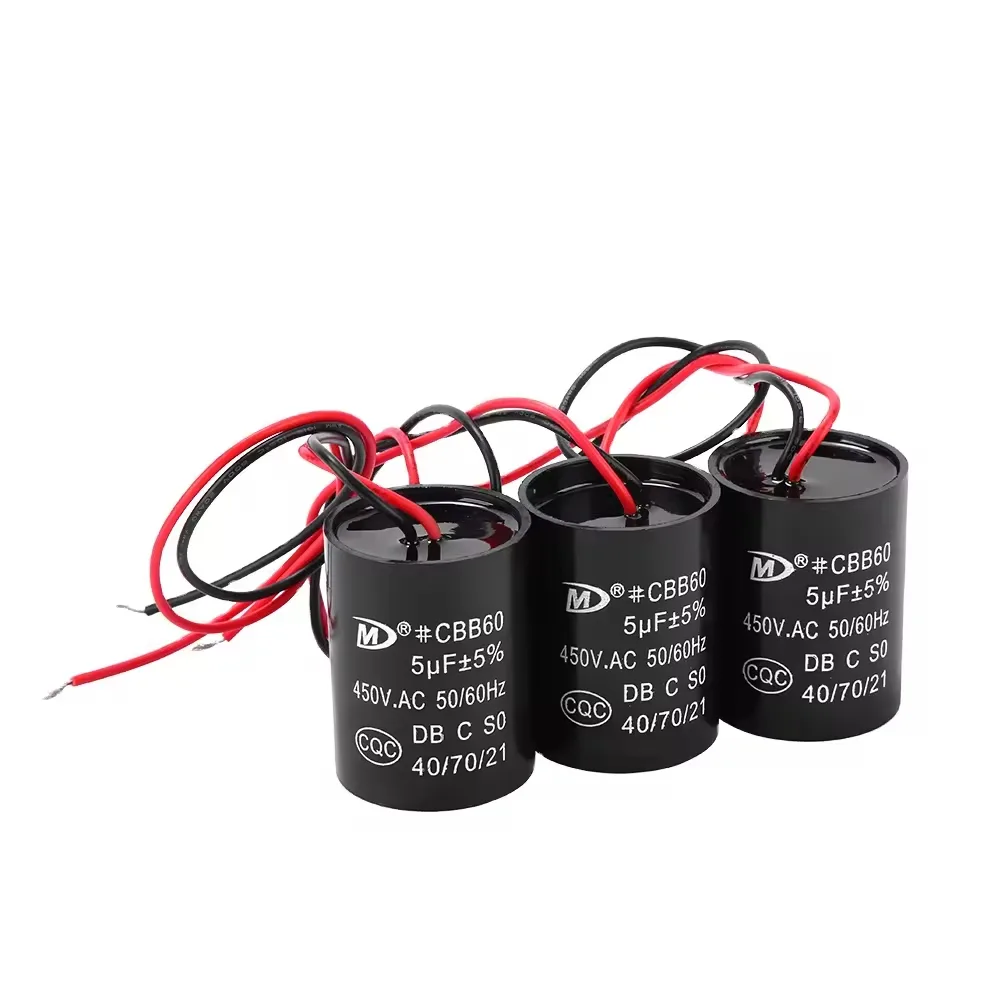
If you're sourcing motor run or power film capacitors for export, the paperwork can feel like a maze. The phrase film capacitor certifications gets thrown around loosely, but each mark—TUV, VDE, CB, LVD, RoHS—covers a specific slice of safety, performance, or environmental compliance. Knowing what each one actually verifies saves you from nasty surprises at customs or in the field. This guide breaks down the standards and certificates that matter, using SMILER's verified documentation as a concrete reference.
Why Certifications Matter for Export Buyers
Your customer's procurement team doesn't just want a capacitor that works on the bench. They want proof it meets the safety expectations of the destination market. A missing certificate can stall a shipment at the port, trigger a recall, or void an insurance claim. For motor capacitors in appliances, the stakes are higher—a failed run capacitor can take out a compressor or start a fire. That's why the chain of standards and marks exists: to give you a paper trail from the film inside the can to the label on the box.
SMILER's certification set is a useful case study. The company holds ISO9001:2005 for quality management, plus product safety marks from TUV, VDE, and the CB Scheme, along with LVD and RoHS compliance. Each one answers a different question. Let's walk through them.
The IEC Standards Behind the Marks
Certification marks don't appear from nowhere. They're issued against published standards. For film capacitors, three IEC standards dominate the landscape, and each applies to a different product family.
IEC 61071 – Power Electronic Capacitors
This is the core standard for DC-link and snubber capacitors in power electronics. It covers capacitors for power electronic equipment—think solar inverters, VFDs, EV chargers, and UPS systems. IEC 61071 defines test requirements for voltage withstand, insulation resistance, capacitance tolerance, and endurance. It also sets expectations for self-healing behavior and safety disconnection. If you're designing a 100kW string inverter, the DC-link capacitor should be qualified to IEC 61071. SMILER's MKP-LL, MKP-LS, MKP-LM, MKPH-S, and MKP-AM series all reference GB/T 17702, which is the Chinese adoption of IEC 61071. That alignment means the test methods and acceptance criteria match the international standard.
IEC 60384-14 – EMI Suppression Capacitors
This standard governs fixed capacitors for electromagnetic interference suppression, particularly the X and Y classes used across the line. The MKP X2 series falls under IEC 60384-14, with additional recognition under UL60384-14 and GB/T 14472-1998. For export buyers, IEC 60384-14 is the benchmark for safety in switch-mode power supplies and appliance control boards. It specifies impulse voltage tests, damp heat endurance, and active flammability requirements. A capacitor that passes IEC 60384-14 has demonstrated it won't fail short and create a fire hazard under normal and abnormal conditions.
IEC 60252-2 – AC Motor Capacitors
Motor run and start capacitors have their own standard: IEC 60252-2. This covers AC motor capacitors for motor starting and running duty, including the CBB and CD families. It defines endurance classes (A, B, C), safety classes (S0–S3), and test sequences for capacitance drift, tangent of loss angle, and voltage proof. SMILER's CD60 series explicitly cites IEC 60252-2 and GB/T 3667.2. The CBB60, CBB61, and CBB65 series also operate under this framework, with declared life classes and safety ratings. When you see a CBB65 with a P2 explosion-proof rating, that's IEC 60252-2 language for a capacitor designed to fail safely under pressure.
Decoding the Certificate Numbers: TUV, VDE, CB, LVD, RoHS
Now let's map the marks to the paperwork. Each certificate number tells you who tested what, and against which standard.
TUV Mark – R 50352497 0002
The TUV certificate covers AC motor capacitors and is valid until 2030-06-26. TUV is a German certification body, and their mark is widely recognized in Europe and beyond. For export buyers, a TUV certificate on an AC motor capacitor signals independent verification of electrical safety and endurance. It's particularly relevant for appliances sold into markets that expect European-style safety approvals.
VDE – 40034278
VDE is another German certification institute, and their mark is a benchmark for electrical components in Europe. The VDE certificate 40034278 covers motor running capacitors. VDE certification typically involves factory inspections and ongoing surveillance, not just a one-time type test. That ongoing oversight gives you confidence that the production line consistently meets the standard, not just the sample that was submitted.
CB Scheme – CN36735 and CN65200
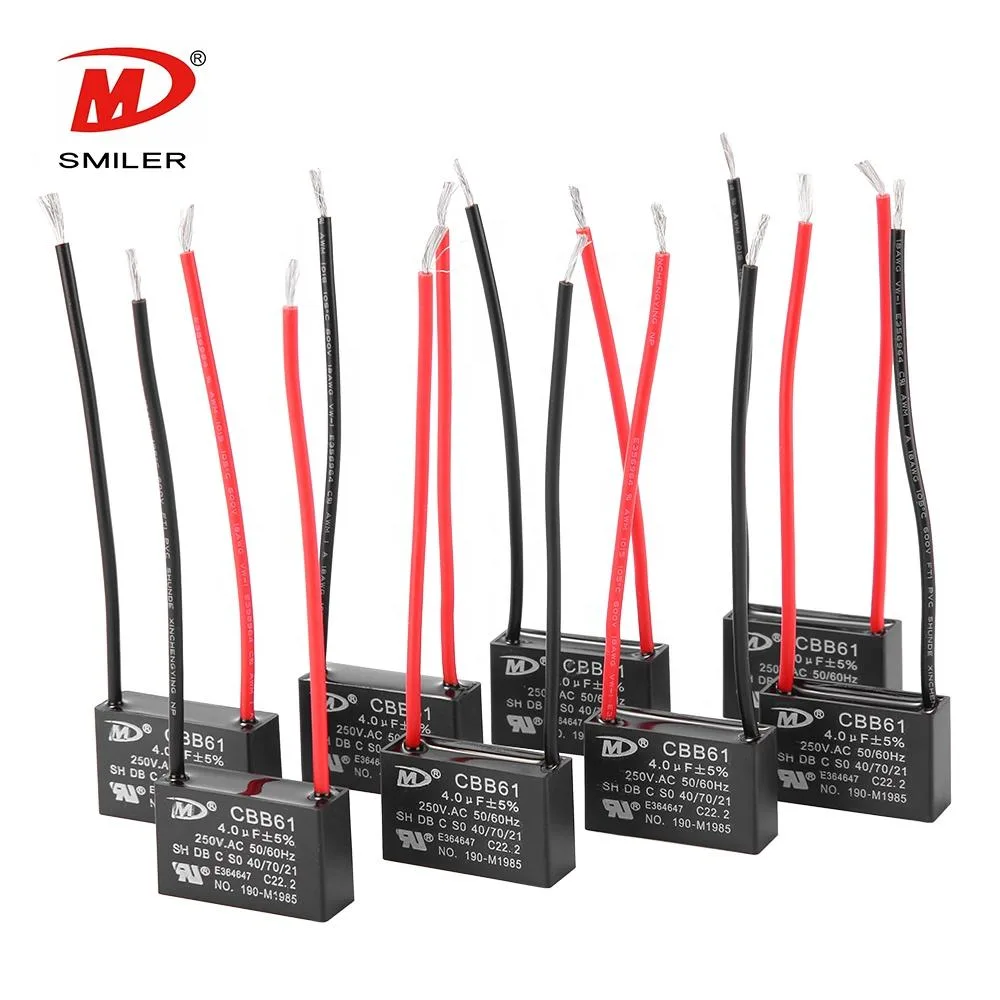
The CB Scheme is an international system for mutual recognition of test certificates. A CB certificate from one member country can be used to obtain national certifications in others, which saves time and money when you're exporting to multiple markets. SMILER holds CB certificates CN36735 for AC motor capacitors and CN65200 for the CBB61 series. For a buyer sourcing CBB61 fan capacitors for different countries, the CB certificate is a fast track to local approvals. You can learn more about the CBB61 series on the product page.
LVD – AN 50706408 0001
The Low Voltage Directive (LVD) is an EU directive, not a standard. It requires that electrical equipment within certain voltage limits meets safety objectives. The LVD certificate AN 50706408 0001 covers capacitors and demonstrates compliance with the directive's essential health and safety requirements. For buyers importing into the EU, the LVD certificate is a key document. It's often requested alongside the CE marking declaration.
RoHS – CANEC26003636901
RoHS restricts hazardous substances like lead, mercury, and cadmium in electrical equipment. The RoHS certificate CANEC26003636901 for AC motor running capacitors is valid from 2026-02-09 to 2027-06-15. For export buyers, RoHS compliance is non-negotiable in Europe and increasingly expected elsewhere. It confirms the capacitor won't introduce restricted substances into your product, which matters for your own environmental compliance declarations.
Comparing Certification Coverage Across SMILER Series
Not every series carries every mark, and that's normal. The certification scope follows the product's intended application. Here's a snapshot of how the main series line up against the key standards and marks.
| Series | Primary Standard | Key Certifications / Marks | Typical Application |
|---|---|---|---|
| CBB60 | IEC 60252-2 | CB, TUV, VDE, RoHS | Pumps, washing machines, general AC motors |
| CBB61 | IEC 60252-2 | CB (CN65200), RoHS | Fans, air conditioners, small motors |
| CBB65 | IEC 60252-2 | RoHS, explosion-proof P2 | Air conditioning compressors, HVAC |
| CD60 | IEC 60252-2 | RoHS | Motor starting, heavy-duty compressors |
| MKP-LL / LS | IEC 61071 | RoHS, UL94 V-0 (housing) | Solar inverters, VFDs, EV chargers |
| MKP-LM (THB) | IEC 61071 | RoHS, UL94 V-0, THB tested | PV inverters, industrial power supplies |
| MKPH-S / LS | IEC 61071 | RoHS, UL94 V-0 | IGBT snubbers, EV charging |
| MKP X2 | IEC 60384-14 | RoHS, UL60384-14 | EMI suppression, power supplies |
This table reflects the verified certificate scope. For the CBB60 motor run capacitor, the combination of CB, TUV, VDE, and RoHS gives you broad coverage for appliance exports. The CBB61 fan capacitor carries CB and RoHS, which is typical for fan and small motor applications. Power electronics series like MKP-LL and MKPH-S are built to IEC 61071 and carry RoHS plus UL94 V-0 housing flammability ratings. If you need a deeper dive into the CBB60 series, the product page has the details.
What ISO9001:2005 and SGS Verification Add
Product certificates tell you the design meets a standard. Quality management certification tells you the factory can consistently produce to that design. SMILER operates under ISO9001:2005, which covers the quality management system across design, production, and service. That's the foundation. On top of it, the SGS on-site verification report 489624232_P+T confirms the manufacturing facility, equipment list, and production capacity. SGS is an independent inspection company, and their report is often requested by buyers who want third-party assurance before placing a large order. The report verifies 9 production lines, 31 pieces of professional equipment, and a daily output of around 300,000 units. It also notes the 7-member QA/QC team and in-house laboratory. For an export buyer, that combination—product certificates plus factory verification—reduces the risk of receiving a batch that doesn't match the sample.
You can read more about the company's background and certifications on the about page.
Frequently Asked Questions
What's the difference between TUV and VDE certification?
Both are German certification bodies with strong recognition in Europe. TUV and VDE each issue marks against specific standards. The key difference for you as a buyer is the certificate scope and the ongoing surveillance regime. SMILER holds TUV R 50352497 0002 for AC motor capacitors and VDE 40034278 for motor running capacitors. Both certificates are valid and cover the relevant product families. In practice, having both marks gives you flexibility when a customer's specification calls for one or the other.
Do I need CB certification if I already have TUV?
Not necessarily, but CB can simplify multi-country approvals. The CB Scheme is a mutual recognition arrangement. A CB certificate like CN36735 or CN65200 can be used to obtain national certifications in participating countries with less retesting. If you're exporting to several markets, CB can save time and cost. If you're only shipping to one country, the local mark may be sufficient. It depends on your destination and your customer's requirements.
How do I verify a certificate is authentic and current?
Always check the certificate number and validity dates directly with the issuing body or through the manufacturer's documentation. For SMILER, the TUV certificate is valid until 2030-06-26, and the RoHS certificate runs from 2026-02-09 to 2027-06-15. The SGS report 489624232_P+T is valid from 2026-06-04 to 2027-06-03. Ask for the full certificate PDFs, not just the numbers, and confirm the product description matches what you're buying. A certificate for a motor run capacitor doesn't automatically cover a DC-link capacitor, so scope matters.
Certifications are more than stamps on a datasheet. They're the evidence that your capacitor will perform safely and legally in its destination market. By understanding what each standard and mark covers, you can specify with confidence and avoid costly compliance gaps. For a deeper look at specific series, explore the CBB60 motor run capacitor or the CBB61 fan capacitor pages.
Related Capacitor Series
Need Datasheets or Custom OEM Film Capacitors?
Send your capacitance, voltage rating, and mechanical drawing. Our 9-member engineering team replies within 24 hours with 5-day prototyping availability.